

Spraying is the quickest way to treat rough-sawn timber. The paint gets into the grain and gaps that a brush struggles to reach. Here's how to do fences, sheds, stables and other outbuildings properly.
Choose the right sprayer
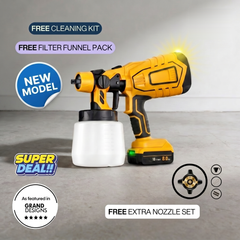
- Garden fences, sheds and summerhouses: a cordless HVLP paint sprayer on your 18V batteries. There's no cable to drag along the fence line, and it gives less overspray near plants and cars.
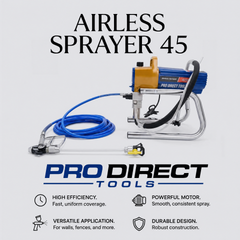
- Long runs of stables, barns and farm buildings: an airless sprayer working straight from the tin covers big areas much faster.
Not sure? Read the cordless paint sprayer buying guide.
Pick your day
Spray on a dry, calm day, and check the tin for the minimum temperature and drying time. Wind blows overspray onto cars and neighbours' property, and damp timber won't take the paint evenly.
Prepare the timber
- Brush off dirt, cobwebs and loose flakes.
- Treat green algae and let the wood dry fully.
- Cover plants, paths, windows and anything nearby with dust sheets or masking film.
- Stir the paint well and strain it as you fill the pot.
Technique
- Test on a spare board or cardboard first.
- Start at the top and work down, following the boards.
- Keep the gun at a steady distance and square to the surface: about 20–30 cm for cordless HVLP, about 30–40 cm for airless.
- Overlap each pass by about half and keep moving, so you don't get runs.
- Turn the pattern vertical for posts and edges.
- Two thin coats beat one thick coat.
Batteries on big jobs
Spraying is steady work. With a cordless sprayer, have a second battery charging while you spray, or choose a kit with 2, 3 or 4 batteries.
Clean up
Clean the sprayer as soon as you finish. Dried fence paint in the nozzle is the most common reason a sprayer stops working.
Safety
Wear a suitable mask, eye protection and gloves. Keep children and animals away until the paint is dry, and check the tin for any livestock or plant warnings before treating stables and farm buildings.